
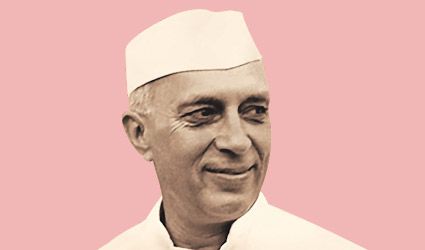
Jawaharlal Nehru, the first Prime Minister of India, is a towering figure in the history of the Indian independence movement and the nation’s post-independence growth. Nehru’s vision and policies have shaped modern India, and his legacy continues to influence the country’s political, social, and economic landscapes. From his leadership in the fight against colonial rule to his tenure as India’s first Prime Minister, Nehru left an indelible mark on the Indian subcontinent.
Main Points
- 1 Early Life and Education
- 2 Political Awakening
- 3 Nehru as Prime Minister of India
- 4 Advocating for Secularism and Democracy
- 5 Promoting Scientific Progress
- 6 Foreign Policy and Non-Alignment
- 7 Challenges in Foreign Relations
- 8 Social Reforms and Nation-Building
- 9 Nehru’s Legacy and Continued Influence
- 10 Summary
Early Life and Education
Nehru was born on November 14, 1889, in Allahabad, India, to Motilal Nehru, a prominent lawyer and nationalist, and Swaroop Rani. He was educated at home until he was 15 years old, after which he attended Harrow School in England. Later, he went on to study at Trinity College, Cambridge, and then pursued law at the Inner Temple in London. His education was grounded in both Western ideas and Indian traditions, which would later influence his thoughts on governance and policy.
Political Awakening
Nehru’s political journey began with his involvement in the freedom struggle. His early exposure to British imperialism led to a deep sense of injustice and fueled his desire to fight for India’s independence. The turning point in his life came after witnessing the brutalities of the Jallianwala Bagh massacre in 1919, which intensified his resolve to fight against British colonial rule.
In the early 1920s, Nehru became involved with the Indian National Congress, initially supporting the cause of self-rule within the British Empire. However, after his association with Mahatma Gandhi, his views evolved toward seeking full independence. Nehru’s leadership was crucial during key phases of the struggle, including the Non-Cooperation Movement (1920-1922) and the Quit India Movement (1942), which ultimately led to India’s independence in 1947.
Nehru as Prime Minister of India
On August 15, 1947, India gained its independence, and Jawaharlal Nehru became the country’s first Prime Minister. His leadership was tested during a time of great upheaval, with the partition of India and Pakistan leading to mass displacement and violence. Nehru’s ability to steer the country through this period of crisis cemented his position as a leader capable of both vision and execution.
Advocating for Secularism and Democracy
Nehru’s commitment to a secular, democratic India was central to his vision. He sought to build a nation where people of all religions, castes, and communities could coexist peacefully. His policies promoted democratic socialism, focusing on social justice, education, and economic development.
One of Nehru’s major achievements was the establishment of the Planning Commission in 1950, which laid the foundation for India’s Five-Year Plans. His policies emphasized industrialization, technological development, and agricultural growth, aiming to modernize the country and reduce poverty.
Promoting Scientific Progress
Nehru was a staunch advocate for scientific progress, which he believed was key to India’s future. Under his leadership, India embarked on a journey of technological advancements. The establishment of prestigious institutions such as the Indian Institutes of Technology (IITs) and the Indian Space Research Organisation (ISRO) were key milestones in this regard.
His vision for India was not only that it would be an economic powerhouse but also a nation driven by scientific knowledge and innovation. He played a key role in India’s nuclear program, promoting peaceful uses of nuclear energy as a symbol of national pride.
Foreign Policy and Non-Alignment
During the Cold War, Nehru’s foreign policy was marked by the principles of non-alignment, meaning that India would not align itself with either the Western bloc led by the United States or the Eastern bloc led by the Soviet Union. Nehru believed that India’s independent foreign policy would allow the country to play a central role in the international community and advocate for global peace and stability.
Nehru’s role in the establishment of the Non-Aligned Movement (NAM) in 1961 was a testament to his vision of a world where newly independent nations could cooperate outside of the binary world order of the Cold War. His commitment to peace and neutrality helped India maintain its sovereignty in global affairs.
Challenges in Foreign Relations
Despite his strong ideological stance, Nehru faced challenges in foreign policy, particularly with China. The Sino-Indian War in 1962, resulting from territorial disputes, marked a turning point in Nehru’s leadership. The defeat in the war had a lasting impact on his health and political standing, as it raised questions about India’s military preparedness and Nehru’s leadership during a critical time.
Social Reforms and Nation-Building
Nehru’s tenure as Prime Minister also saw significant social reforms aimed at improving the quality of life for the average Indian. His government worked on introducing laws to protect the rights of women, promote education, and build an inclusive society.
Education and Social Welfare
Under Nehru’s leadership, India made significant strides in education. He understood the importance of an educated populace and championed the cause of free public education for children. The government also launched initiatives like mid-day meal schemes to combat child malnutrition. Nehru’s emphasis on science and technology in education has had a lasting impact on India’s intellectual and technological growth.
He also advocated for the rights of women, including the right to inherit property and divorce their husbands. His government passed the Hindu Code Bill, which aimed at giving women legal rights and promoting gender equality.
Nehru’s Legacy and Continued Influence
Nehru passed away on May 27, 1964, but his legacy continues to influence India’s political and cultural identity. His vision of a secular, democratic India still resonates, especially in the context of ongoing debates about the nation’s social fabric and religious diversity.
Today, Nehru is remembered for his vision of India as a modern, progressive, and inclusive nation. His contributions to India’s economic and scientific development remain foundational to the country’s continued growth. Institutions like the IITs, ISRO, and various other educational and scientific institutions that Nehru established continue to serve as pillars of India’s success in the global arena.
Celebrating Nehru’s Birth Anniversary
On November 14, 2024, India will celebrate the 135th birth anniversary of Jawaharlal Nehru, also known as Children’s Day. On this occasion, various events will be held across the country to honor his contributions. Nehru’s vision for the nation is celebrated through initiatives that focus on education, science, and technology, keeping his ideals alive for future generations.
In recent years, Nehru’s contributions have come under scrutiny in the political landscape, with some questioning his legacy. However, his commitment to India’s secularism, democratic values, and scientific progress continues to hold significant relevance today.
Summary
Jawaharlal Nehru’s life and legacy represent the indomitable spirit of India’s fight for independence and its post-independence journey. Through his leadership, vision, and policies, he laid the foundations for India’s future as a democratic, secular, and technologically advanced nation. Nehru’s impact on India’s development and his role as a statesman will continue to be remembered for generations to come.


